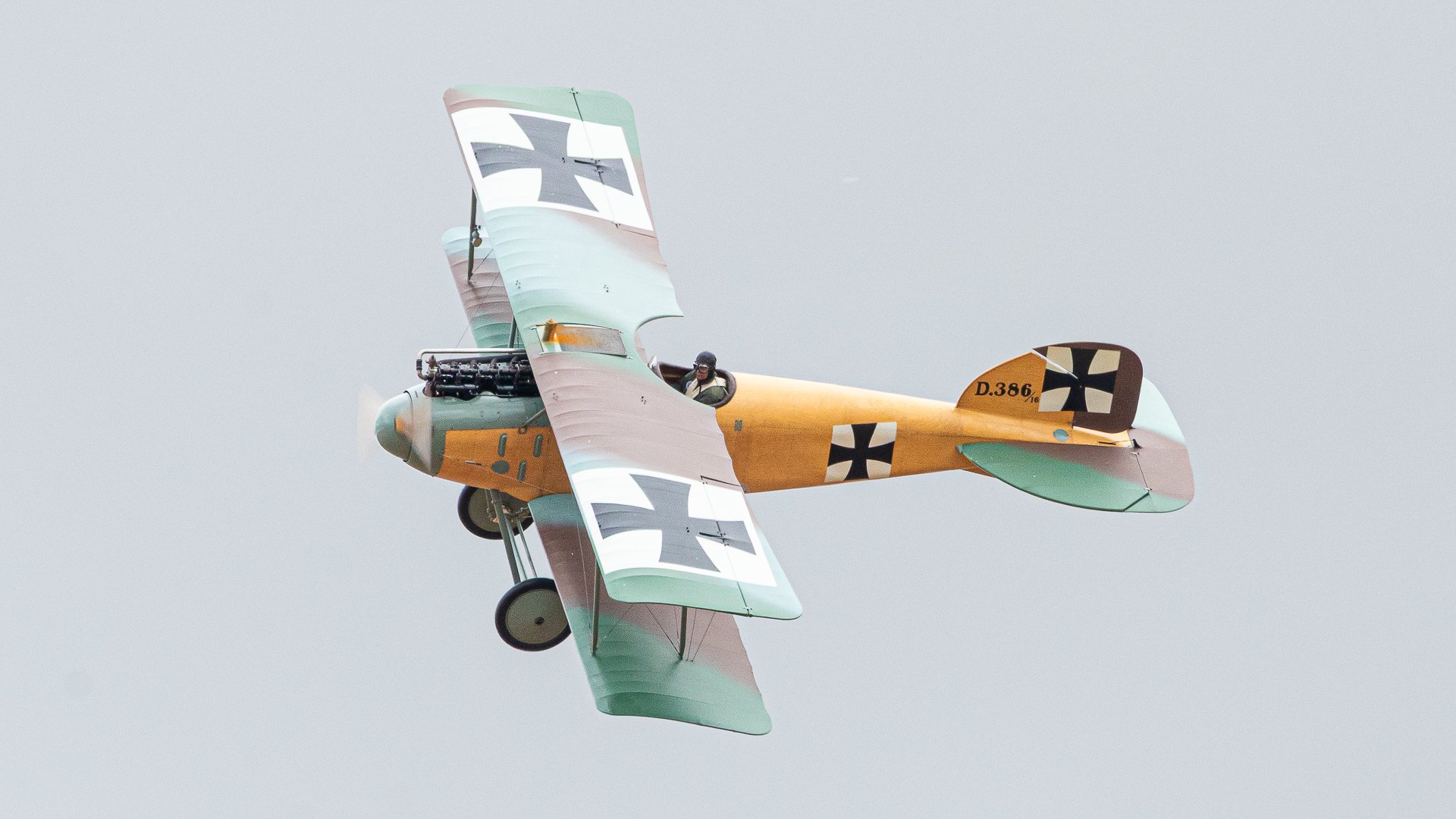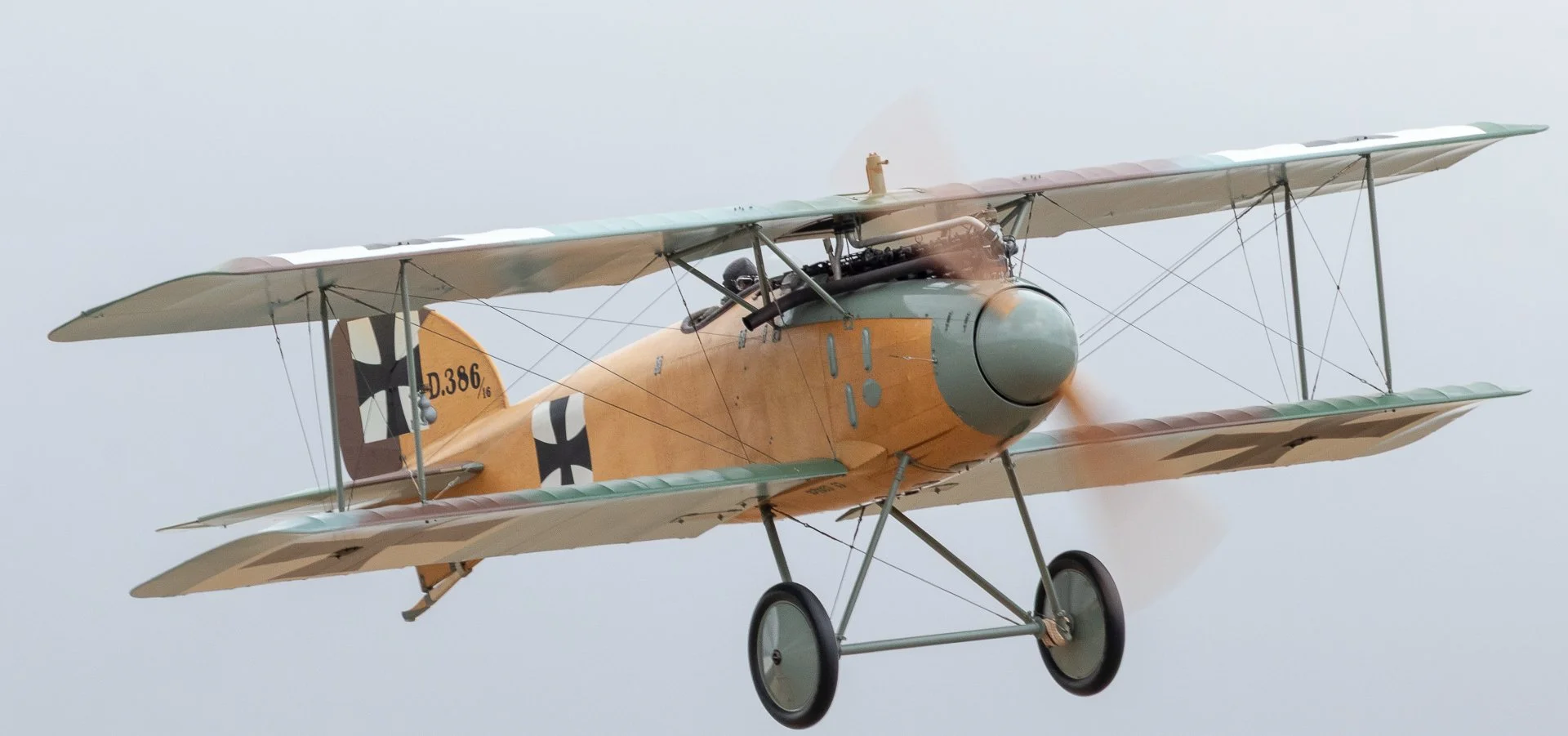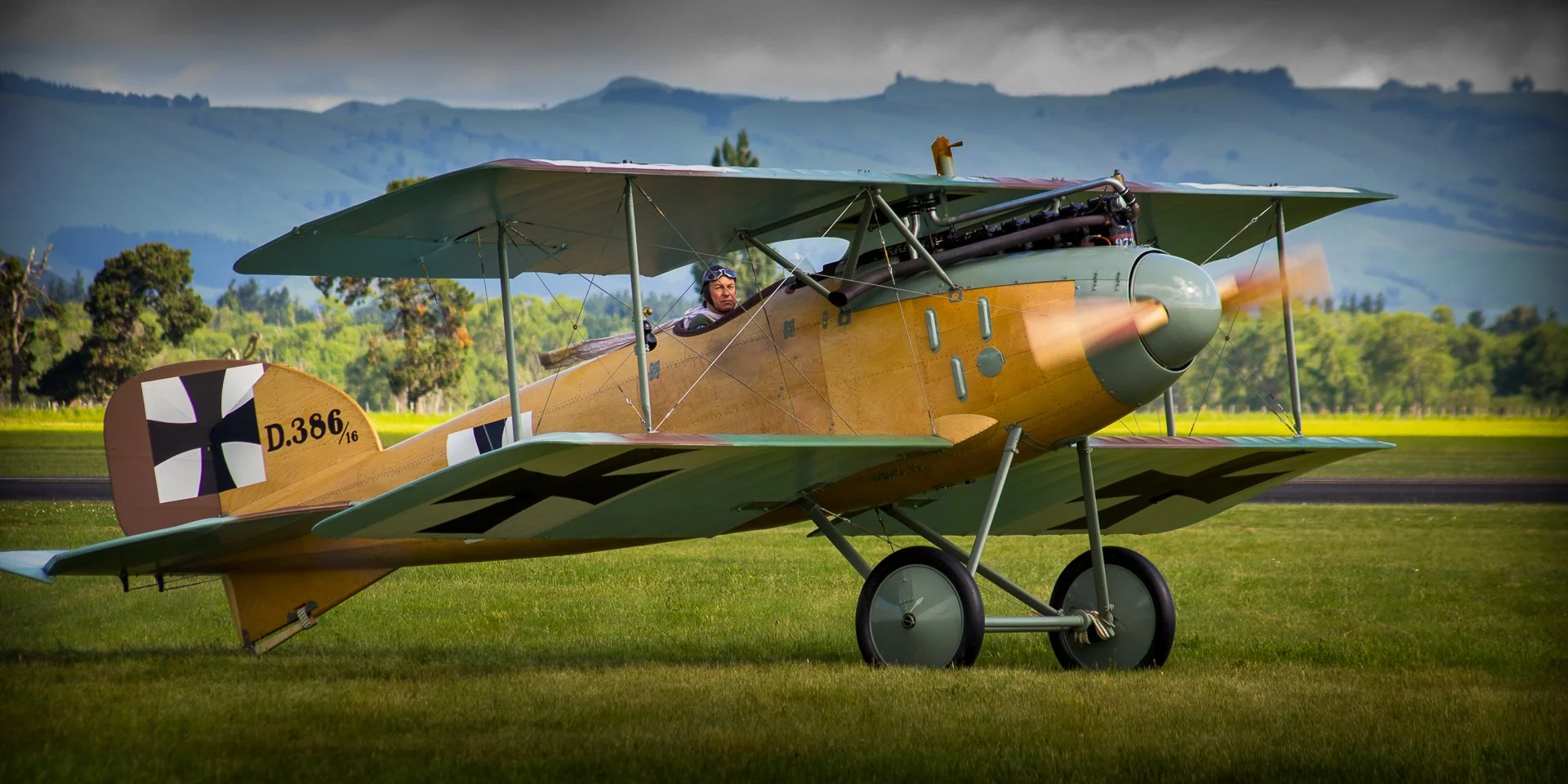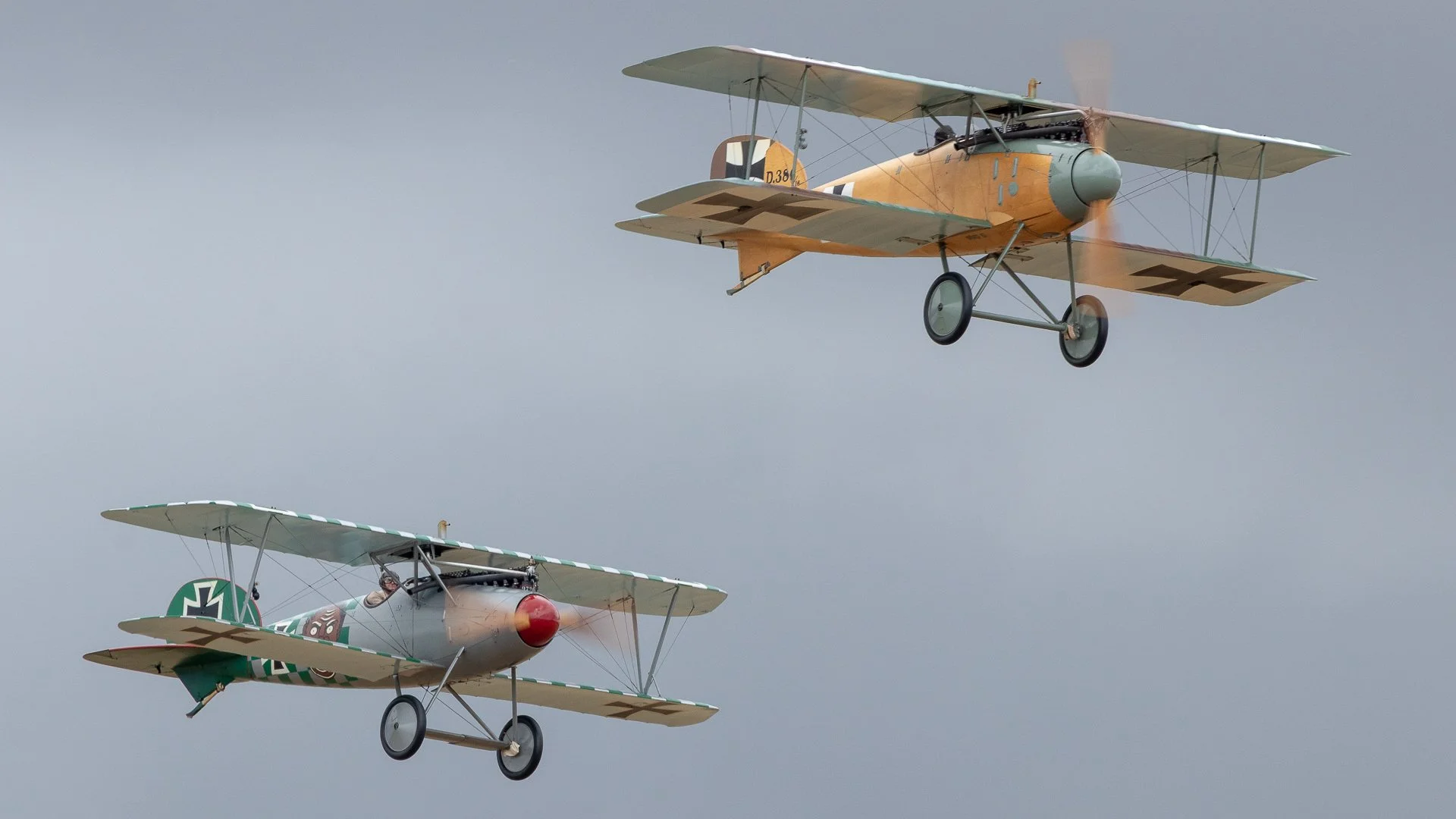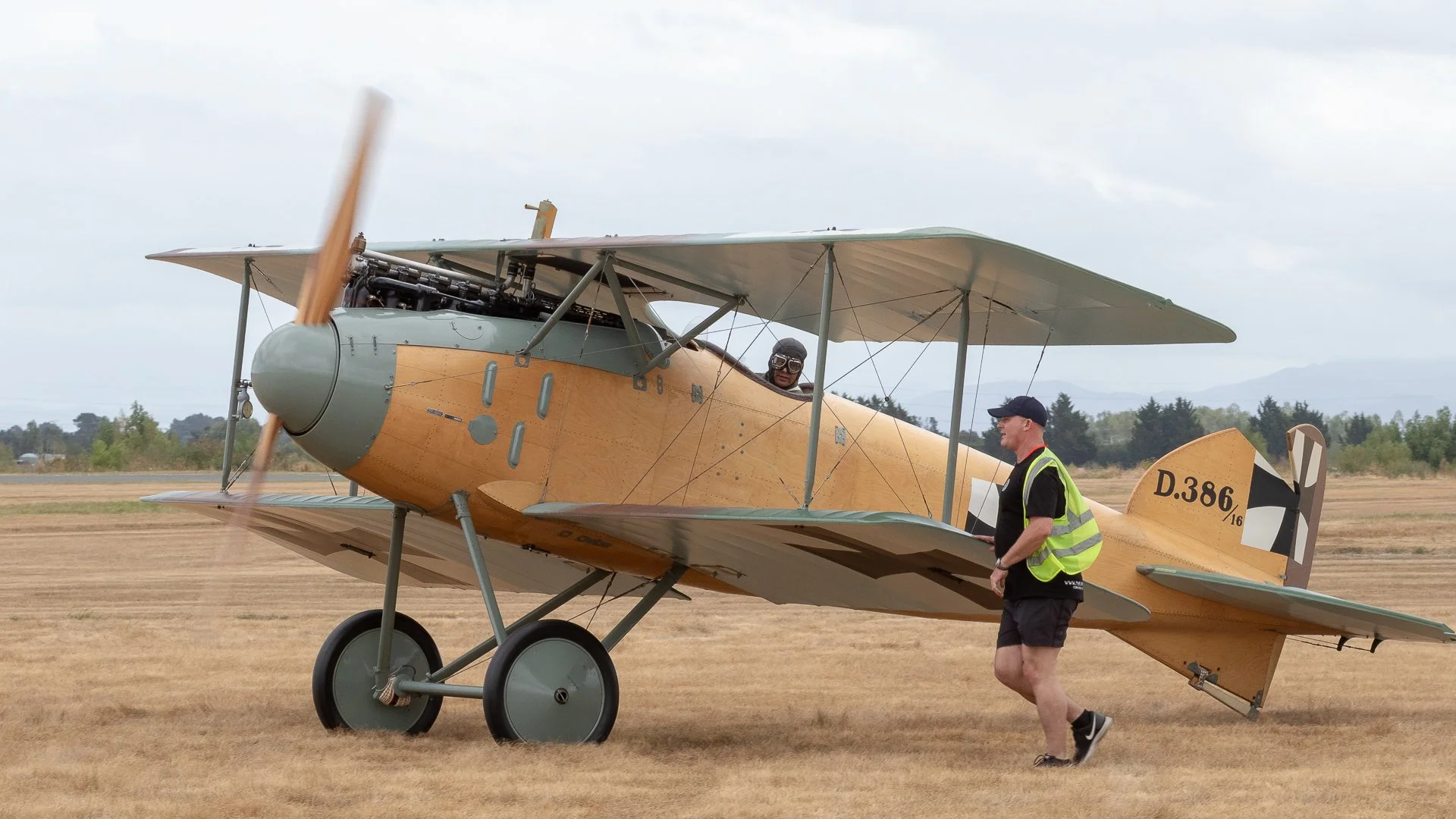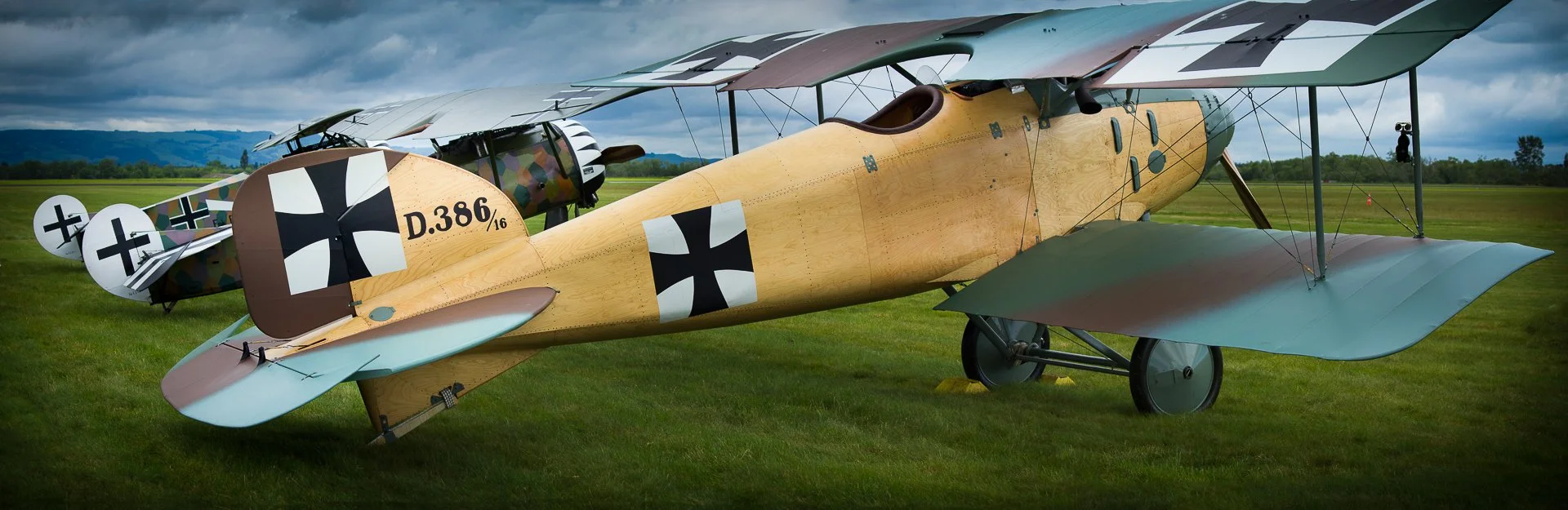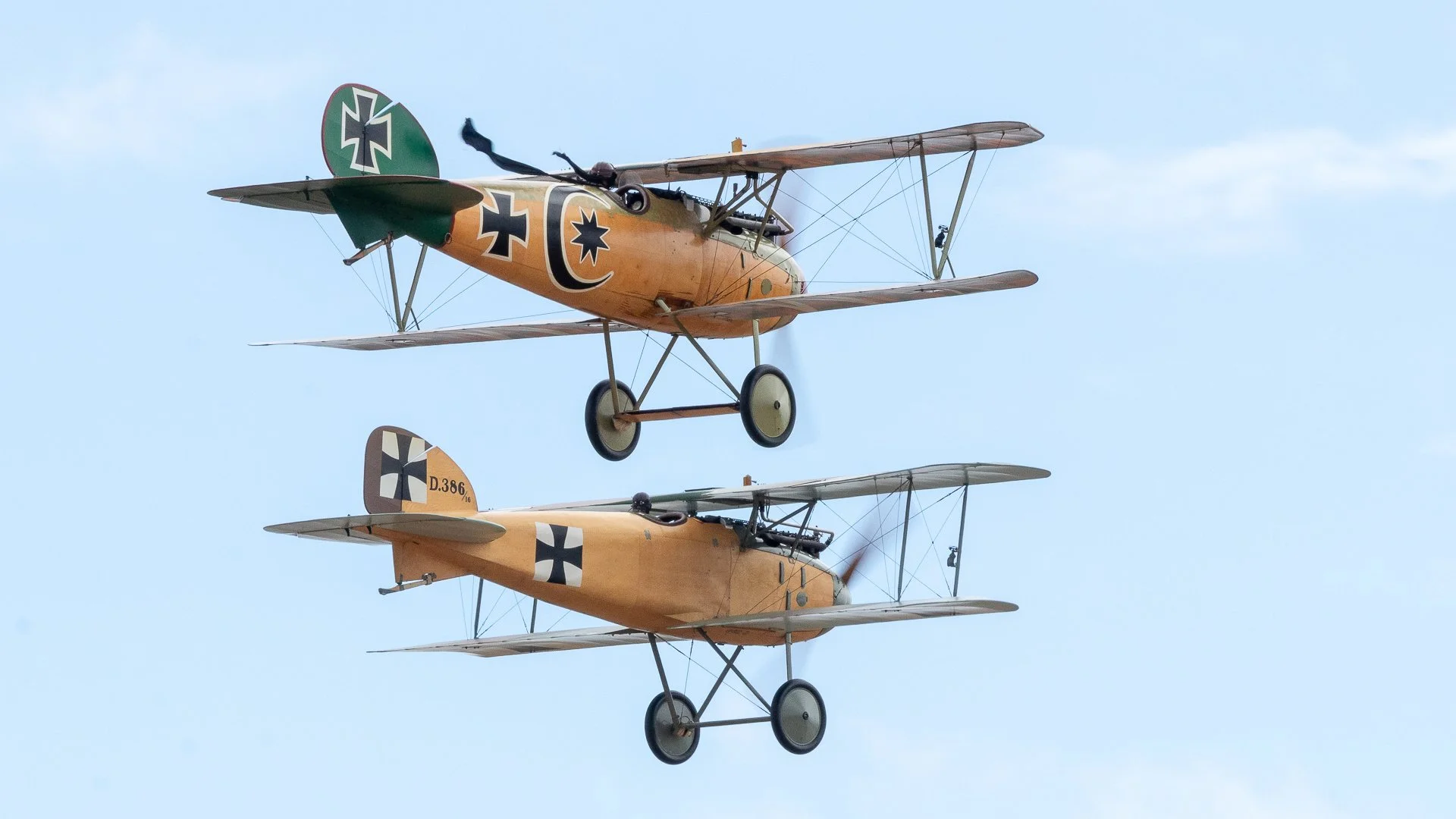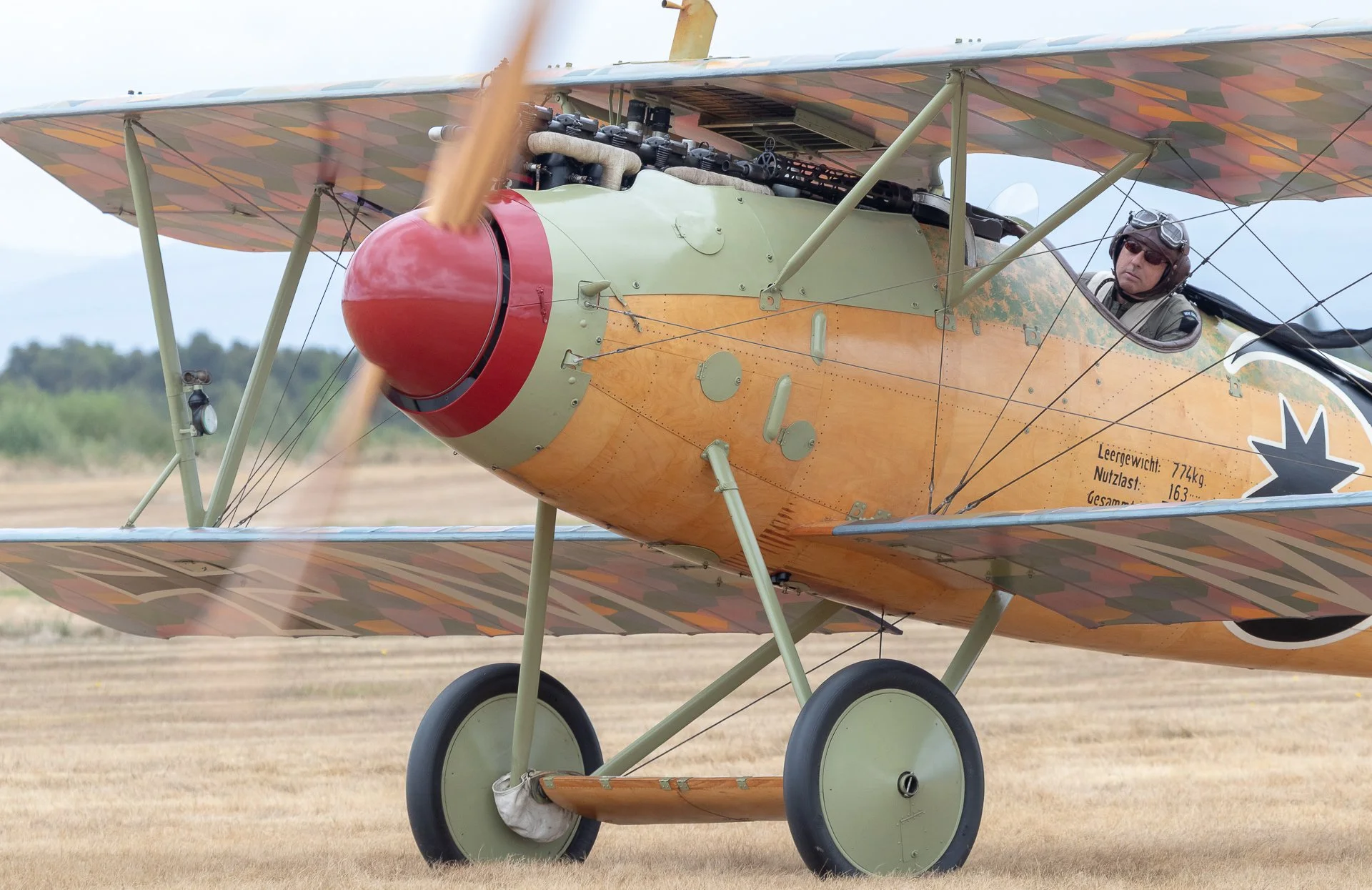
Albatros D.II 386/16
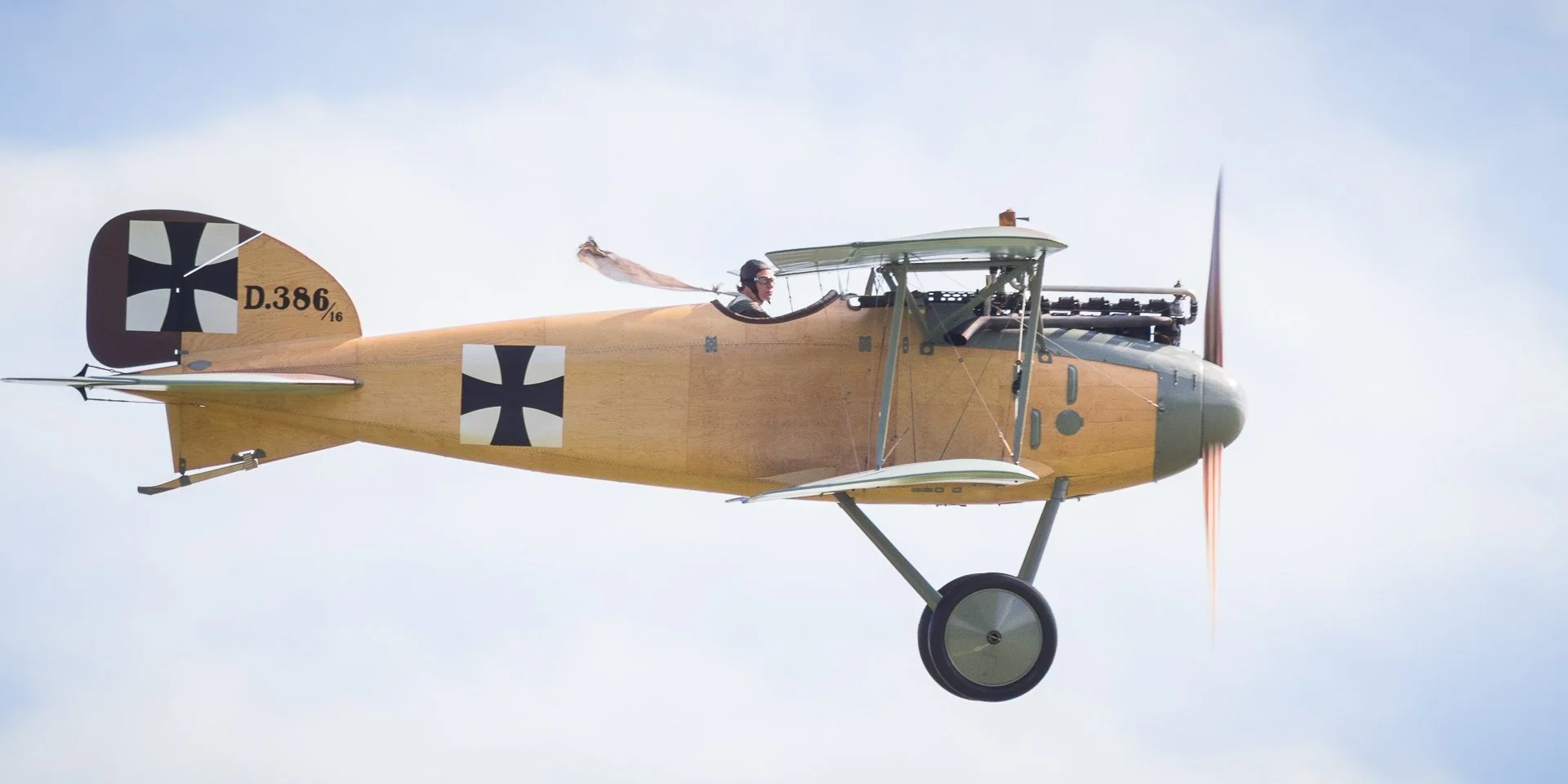
The Albatros D.II was a German fighter aircraft that served with the Luftstreitkräfte (Imperial German Air Service) during World War I, representing a significant advancement in fighter design when it entered service in late 1916. Designed by Albatros Flugzeugwerke, the D.II was an evolution of the earlier D.I model, featuring a more streamlined fuselage, improved aerodynamics, and the distinctive sesquiplane wing configuration—a larger upper wing paired with a significantly smaller lower wing. This design provided excellent visibility and maneuverability while maintaining structural strength. Powered by a Mercedes D.III inline six-cylinder engine producing 160 horsepower, the D.II was armed with two synchronized 7.92mm LMG 08/15 machine guns firing through the propeller arc, giving German pilots a significant firepower advantage over many Allied fighters of the period that still carried only a single gun.
“the Albatros D.II is remembered as a crucial stepping stone in fighter aircraft development and a symbol of German air power during the First World War.”
The specific designation "386/16" refers to an individual aircraft's serial number, indicating it was the 386th aircraft built in 1916. This numbering system helps historians and researchers track specific airframes, their assignments, and combat histories. The Albatros D.II achieved considerable success during the period known as "Bloody April" in 1917, when German fighter squadrons—or Jastas—achieved air superiority over the Western Front, inflicting severe losses on Royal Flying Corps squadrons. The type was flown by many of Germany's leading aces, including the legendary Manfred von Richthofen (the "Red Baron") during his early victories, though he would later become more famous flying the Albatros D.III and eventually the Fokker Dr.I triplane. The D.II's combination of speed (approximately 109 mph), twin machine guns, and good handling characteristics made it one of the most effective fighters of its era, though it was relatively quickly superseded by the improved Albatros D.III and D.V variants. Today, the Albatros D.II is remembered as a crucial stepping stone in fighter aircraft development and a symbol of German air power during the First World War.