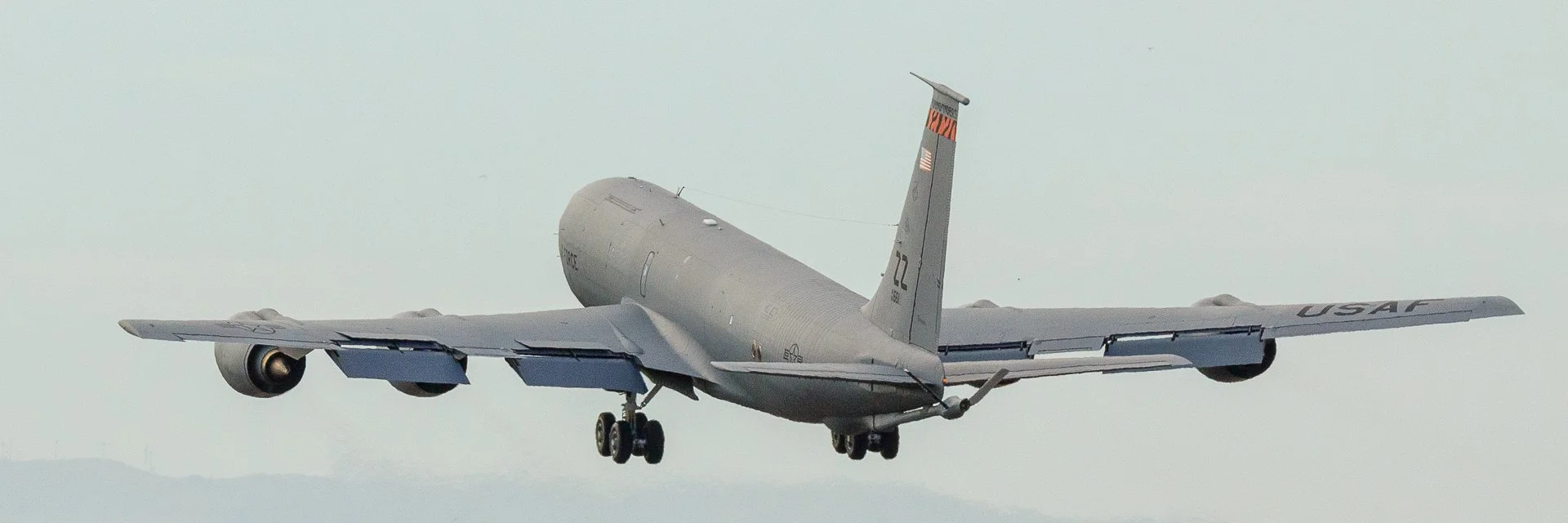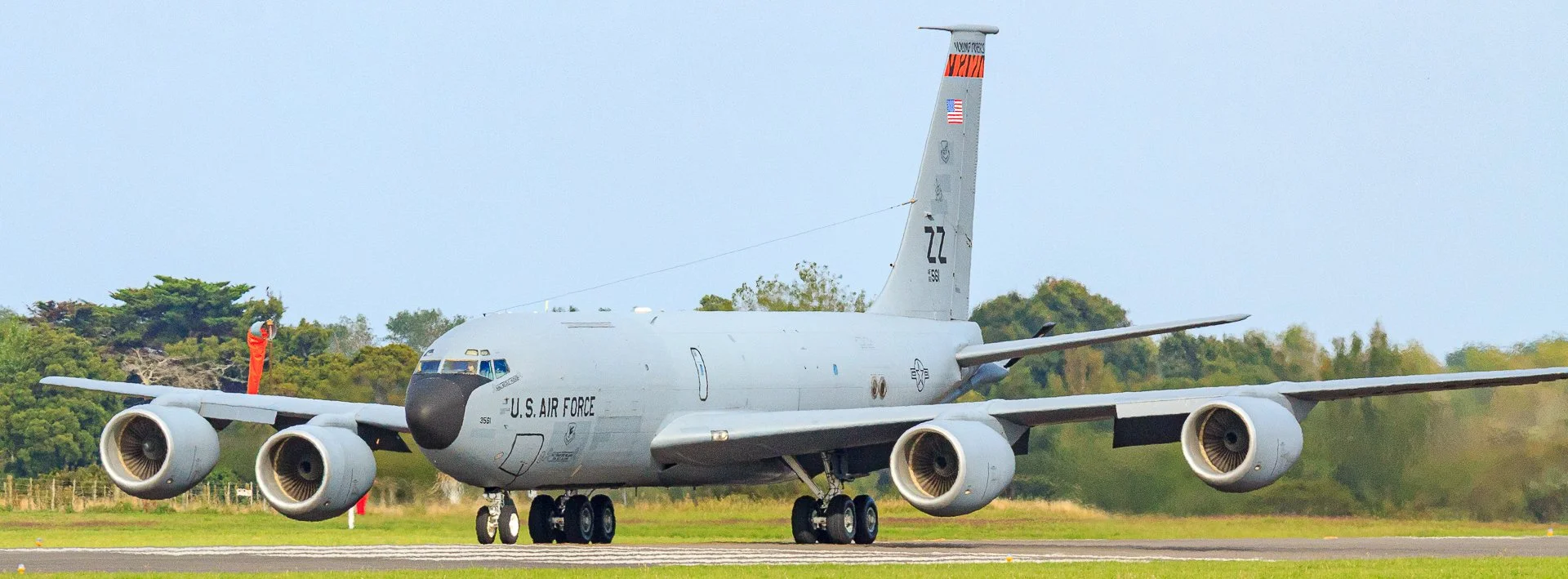
Boeing KC-135 Stratotanker
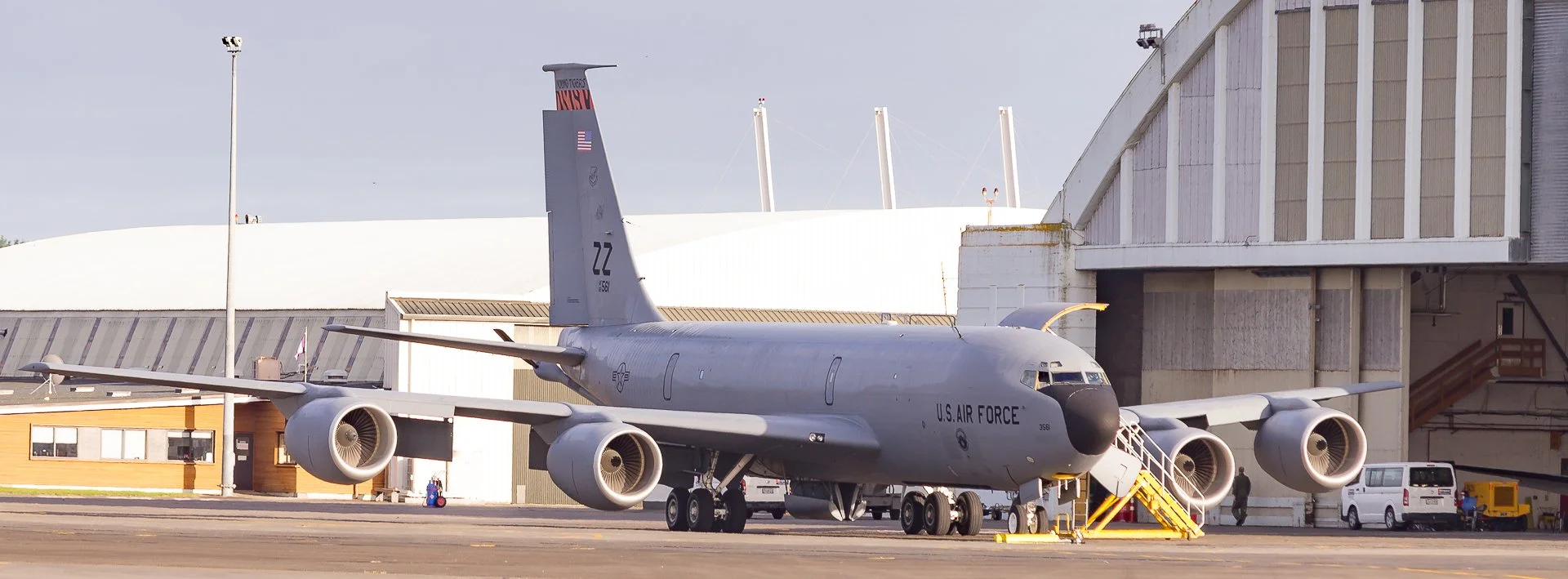
Base Ohakea, Manawatu
The Boeing KC-135 Stratotanker is a military aerial refueling aircraft that has served as the backbone of the United States Air Force's tanker fleet since 1957, making it one of the longest-serving aircraft in U.S. military history. Developed alongside the Boeing 707 commercial airliner from the Model 367-80 prototype (the "Dash 80"), the KC-135 was designed during the Cold War to extend the range and operational flexibility of Strategic Air Command's bomber fleet, particularly the B-52 Stratofortress. The aircraft features a distinctive flying boom refueling system operated by a boom operator stationed in the tail section, allowing for high-speed fuel transfer to receiver aircraft. The KC-135 typically carries about 200,000 pounds of fuel for transfer, along with cargo and passenger capability, and can itself be refueled in flight, providing truly global reach for U.S. air operations.
“The KC-135 typically carries about 200,000 pounds of fuel for transfer, along with cargo and passenger capability, and can itself be refueled in flight, providing truly global reach for U.S. air operations.”
Over its remarkably long service life, the KC-135 fleet has undergone numerous upgrades and modifications to maintain relevance and capability. The most significant upgrade came in the 1980s with the re-engining program that replaced the original Pratt & Whitney J57 turbojet engines with CFM56 turbofans, creating the KC-135R and KC-135T variants. This modification dramatically improved fuel efficiency, increased offload capacity, reduced noise, and extended the aircraft's service life by decades. The KC-135 has supported virtually every major U.S. military operation since the Vietnam War, providing essential refueling for fighters, bombers, transport aircraft, and reconnaissance platforms. With approximately 400 aircraft still in active service with the Air Force, Air National Guard, and Air Force Reserve, along with a small number operated by France and other nations, the KC-135 continues to be mission-critical despite being gradually supplemented by the newer KC-46 Pegasus. Many KC-135s are expected to remain in service into the 2040s, potentially achieving nearly a century of operational use for the basic design.