Boeing B-52 Stratofortress
Hood Aerodrome, Masterton
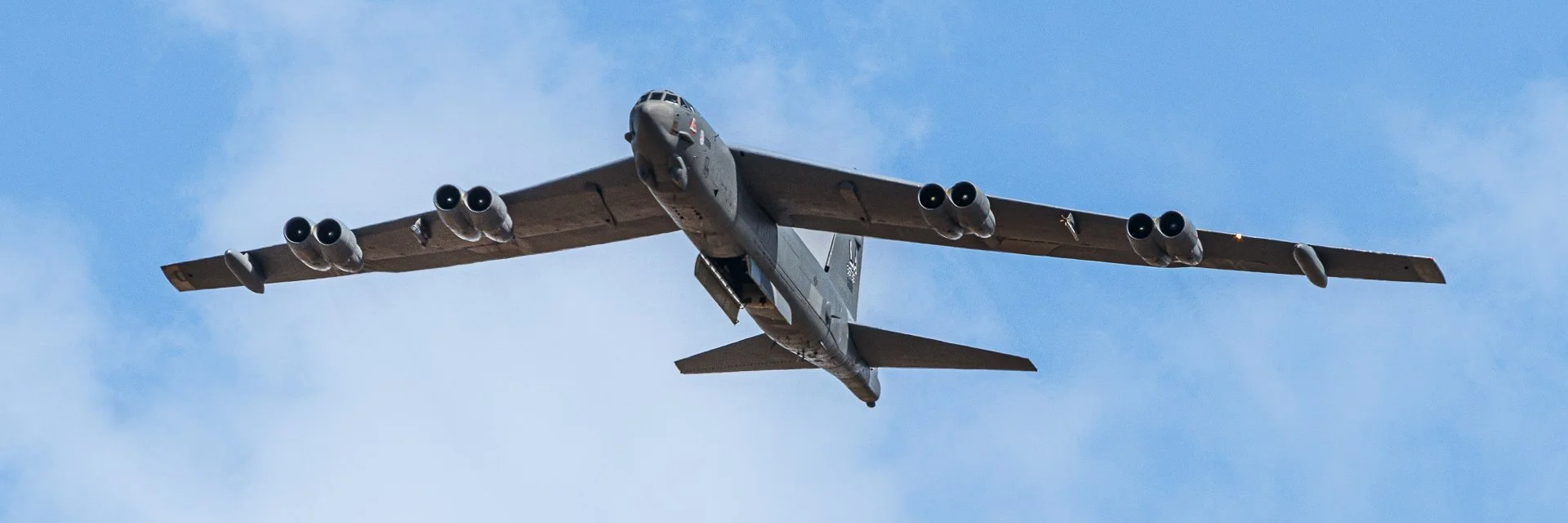
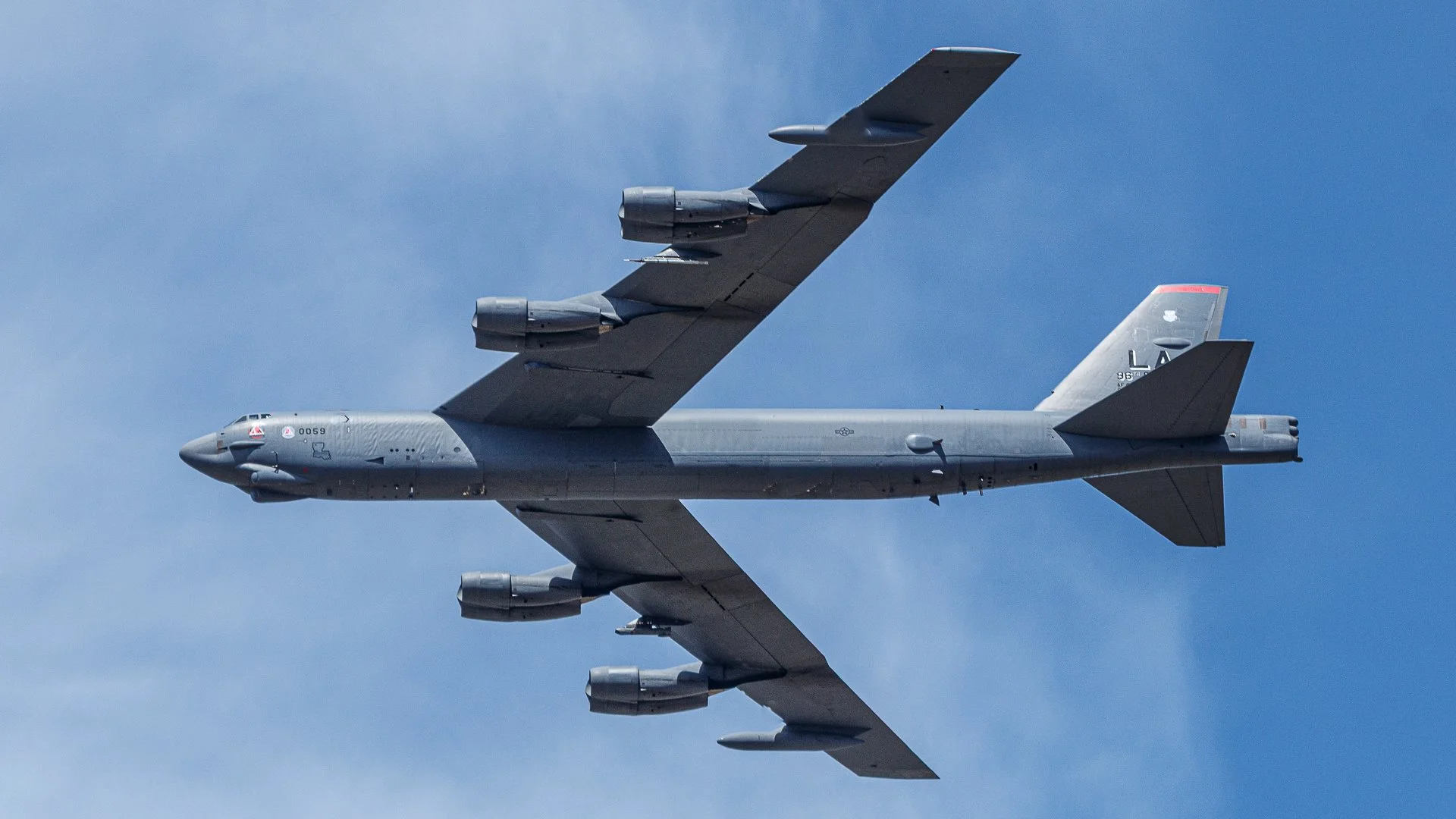
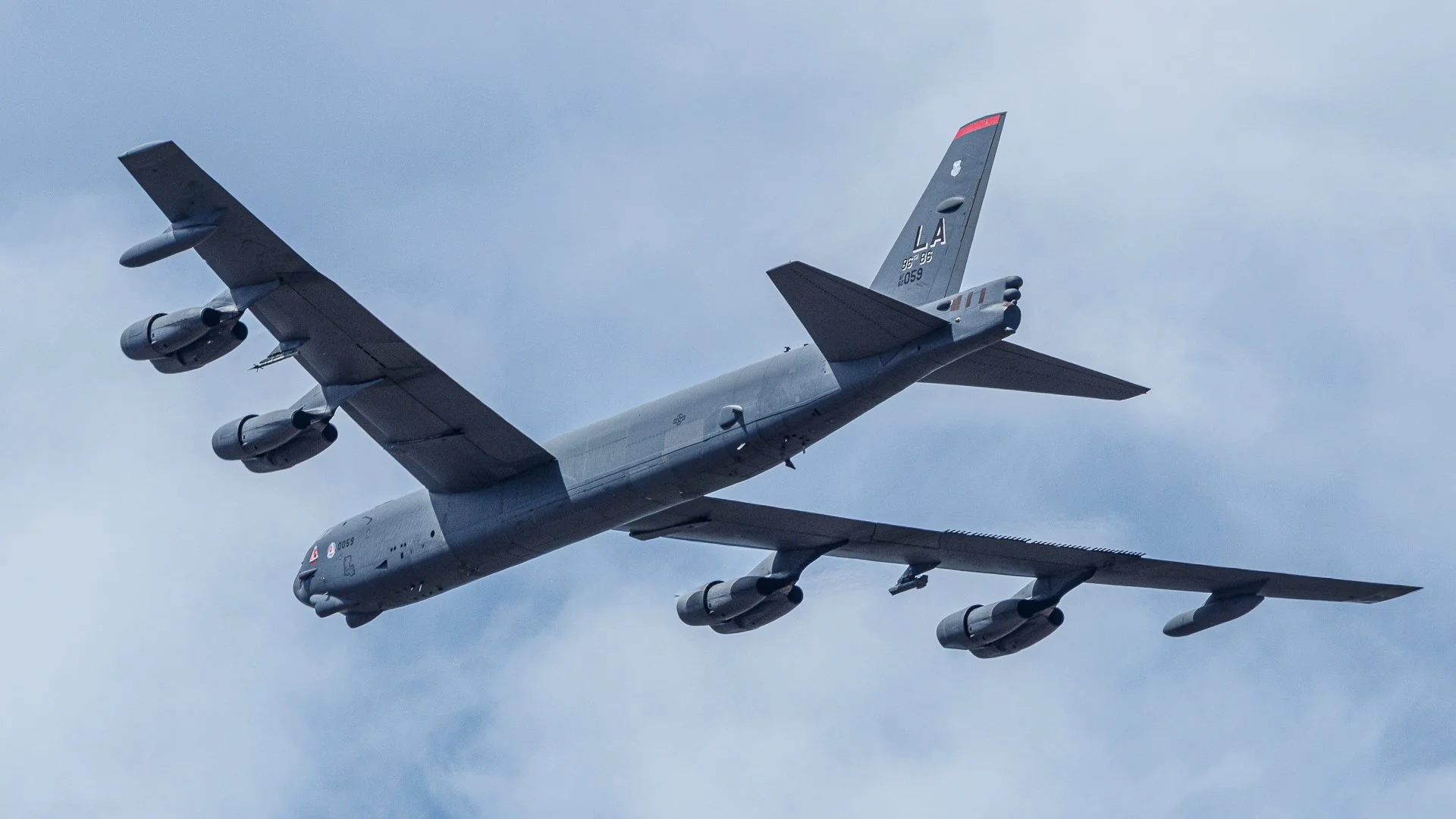
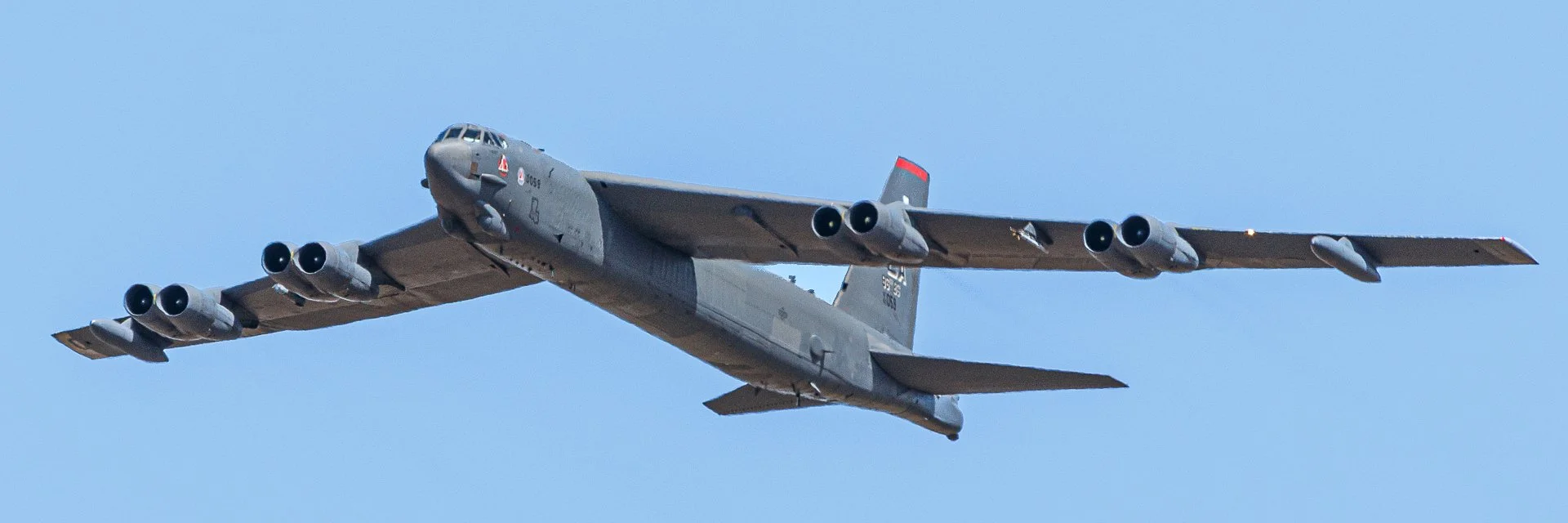
The Boeing B-52 Stratofortress is an American long-range, subsonic strategic bomber that has served as a cornerstone of U.S. nuclear and conventional strike capabilities since 1955. Designed during the early Cold War to carry nuclear weapons deep into Soviet territory, the B-52 features eight turbofan engines mounted on pylons beneath a massive 185-foot wingspan, giving it intercontinental range with aerial refueling. The aircraft's distinctive design includes a swept wing, bicycle-style landing gear with outrigger wheels, and the capacity to carry up to 70,000 pounds of ordnance in its bomb bay and on external hardpoints. Originally built in several variants from the B-52A through B-52H, only the H model remains in service today, powered by Pratt & Whitney TF33 turbofan engines. The B-52 was designed for high-altitude penetration missions but evolved to include low-level terrain-following capabilities and eventually standoff weapons delivery as air defense systems became more sophisticated.
“What makes the B-52 truly remarkable is its extraordinary longevity—it is projected to remain in service until the 2050s or beyond, meaning some airframes could see 90-100 years of operational use. ”
What makes the B-52 truly remarkable is its extraordinary longevity—it is projected to remain in service until the 2050s or beyond, meaning some airframes could see 90-100 years of operational use. The aircraft has been continuously modernized with upgraded avionics, weapons systems, communications equipment, and radar to maintain its relevance across multiple generations of warfare. The B-52 has participated in every major U.S. conflict from Vietnam through Afghanistan and Iraq, demonstrating remarkable versatility by adapting from nuclear deterrence to delivering precision conventional munitions including JDAMs, cruise missiles, and naval mines. The fleet of approximately 76 active B-52Hs is currently undergoing another major upgrade, including re-engining with Rolls-Royce F130 engines to replace the 1960s-era TF33s, which will further extend the aircraft's service life and improve fuel efficiency. The B-52's ability to carry massive payloads over intercontinental distances, its relatively low operating costs compared to stealth bombers, and continuous modernization have made it an enduring symbol of American airpower and one of the most successful military aircraft designs in history.